
Key Equipment: Vacuum Emulsifier / (Jacketed) Mixing Tank
This document describes the process flow and equipment configuration of the disinfectant gel production line, focusing on the line layout built around the core gel preparation equipment — the Vacuum Emulsifier / (Jacketed) Mixing Tank.
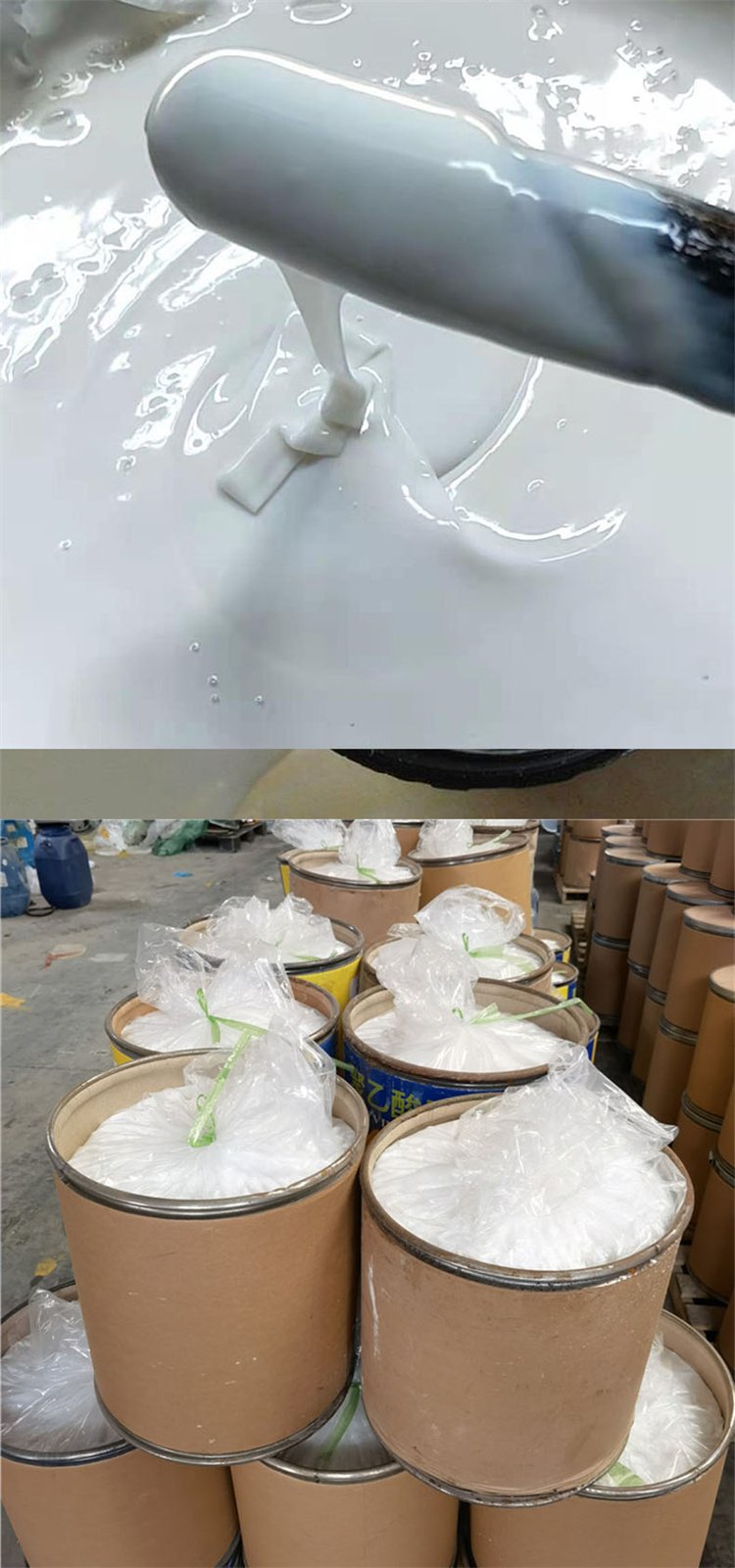
Disinfectant gel is a gel-type disinfection product (including hand disinfectant gel, skin disinfectant gel and surface disinfectant gel) built on gel bases such as carbomer, with ethanol, quaternary ammonium salt disinfection ingredients and auxiliary materials such as humectants, solubilizers and neutralizers added, produced through swelling, neutralization, mixing and homogenization. The core process is to fully swell the gel base and mix it uniformly with the disinfection ingredients, forming a transparent, stable, easy-to-spread gel system with uniform disinfection effect. The uniformity and stability of the gel directly determine the germicidal effect, skin feel and shelf life of the disinfectant gel, and are the key links of the whole production line.
By material flow, the disinfectant gel production line is divided into four functional zones — pretreatment, preparation, post-treatment, and filling & packaging — organized around the core solution preparation equipment (Vacuum Emulsifier / (Jacketed) Mixing Tank):
| Functional Zone | Main Processes | Main Equipment | Function |
|---|---|---|---|
| Pretreatment zone | Raw material inspection, weighing & batching | Electronic scales, batching containers, purified water system | Inspect and weigh the purified water, gel base, disinfection ingredients and auxiliary materials |
| Preparation zone (core) | Gel swelling, neutralization & blending, mixing, defoaming | Vacuum Emulsifier / (Jacketed) Mixing Tank | Swell the gel base; neutralize, mix and homogenize the disinfection phase with the base in the jacketed mixing tank and vacuum-degas |
| Post-treatment zone | Cooling, aging, intermediate inspection | Cooling jacket, aging tank, inspection equipment | Cool down and age to stabilize the gel system and complete intermediate inspection |
| Filling & packaging zone | Filling, packaging, finished product inspection | Filling machine, packaging machine, coding equipment | Metered filling, packaging and labeling; inspect finished products before warehousing |
Materials flow sequentially from the pretreatment zone into the preparation zone, post-treatment zone and filling & packaging zone, forming a continuous, closed and traceable production flow.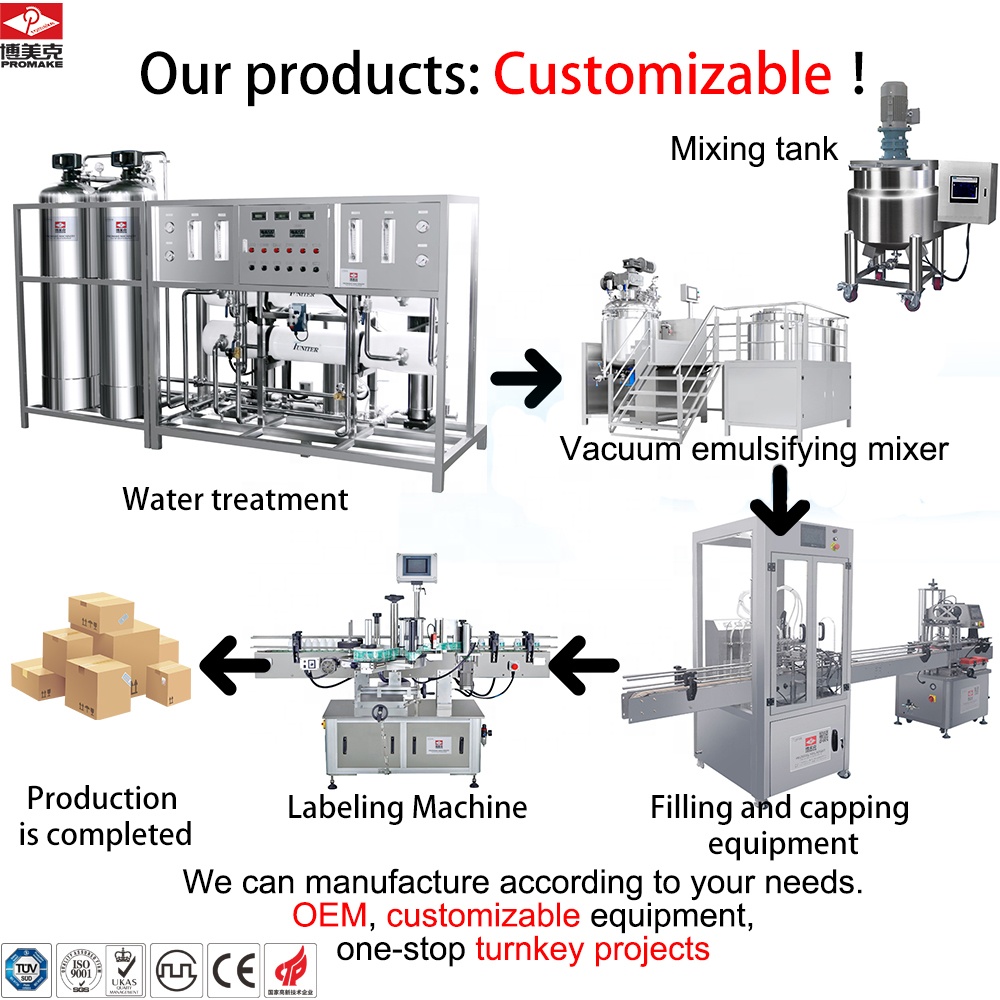
The typical process flow of disinfectant gel products is: raw material inspection → weighing & batching → (gel base swelling and disinfection-phase preparation in parallel) → vacuum emulsification & mixing → cooling → aging → intermediate inspection → filling → packaging → finished product inspection & warehousing. Each step is described as follows:
| No. | Process Step | Step Description | Key Control |
|---|---|---|---|
| 1 | Raw material inspection | Inspect raw materials such as purified water, gel base, disinfection ingredients and auxiliary materials; store them for later use after they pass | — |
| 2 | Weighing & batching | Accurately weigh the purified water, gel base, disinfection ingredients and auxiliary materials according to the formula | Accurate proportioning |
| 3 | Gel base swelling | Charge the gel base such as carbomer into the jacketed mixing tank and swell it fully with purified water into a transparent gel solution | Full swelling ★ |
| 4 | Disinfection-phase preparation | Mix and dissolve the disinfection ingredients such as ethanol and quaternary ammonium salts evenly with the neutralizer, humectant and solubilizer | Disinfectant content ★ |
| 5 | Vacuum emulsification & mixing | Add the disinfection phase into the gel base; neutralize and gelatinize, homogenize and mix in the vacuum emulsifier with vacuum defoaming | Mixing ★ (core) |
| 6 | Cooling | Cool to the set temperature through jacket cooling water | Cooling speed |
| 7 | Aging/resting | Age to further stabilize and clarify the gel system | — |
| 8 | Intermediate inspection | Test semi-finished products on viscosity, pH, disinfectant content and other indicators; transfer to the next process after they pass | Pass/fail judgment |
| 9 | Filling | Quantitatively fill into packaging containers via the filling machine | Filling metering |
| 10 | Packaging | Labeling, sealing, coding, cartoning | Labeling integrity |
| 11 | Finished product inspection & warehousing | Inspect finished products against standards; warehouse them after they pass | Pass/fail judgment |
Note: The steps marked with ★ in the table (gel base swelling, disinfection-phase preparation and vacuum emulsification & mixing) are key process control points, among which vacuum emulsification & mixing is the core control link of the whole production process.
The Vacuum Emulsifier / (Jacketed) Mixing Tank is the core equipment of the disinfectant gel production line. Its main body is a mixing tank with a heating/cooling jacket, integrated with a vacuum system, a homogenizing device and a wall-scraping stirring device, combining gel swelling, neutralization, mixing, homogenization, defoaming and other functions in one unit, ensuring the gel system is uniform and stable.
| Item | Description |
|---|---|
| Function | Gel base swelling and mixing with the disinfection phase, neutralization & gelatinization, homogenization and vacuum defoaming — the key process that ensures the uniformity and stability of the disinfectant gel |
| Main structure | Mixing tank with a heating/cooling jacket; steam or cooling water circulates in the jacket for temperature control |
| Stirring system | A central paddle works with a wall-scraping paddle to ensure thorough mixing of the gel and prevent wall sticking |
| Homogenizing system | A high-speed homogenizing device achieves full dispersion and fine homogenization of the gel base and disinfection ingredients |
| Vacuum system | The tank is evacuated to remove air and reduce oxidation, improving the transparency and stability of the gel |
| Temperature control | Heating and cooling through the jacket, combined with temperature sensors for precise preparation temperature control |
| Advantages | Closed operation, good hygiene, uniform mixing, stable product quality, easy cleaning (CIP) |
In the production line, the Vacuum Emulsifier / (Jacketed) Mixing Tank receives materials from gel base swelling and disinfection-phase preparation and completes neutralization, gelatinization and mixing under heating, vacuum and homogenization, producing a uniform and stable disinfectant gel, which then passes through cooling and aging into the subsequent filling and packaging processes.
Step 1 · Raw material inspection
Inspect raw materials such as purified water, gel base, disinfection ingredients and auxiliary materials; store them for later use after they pass
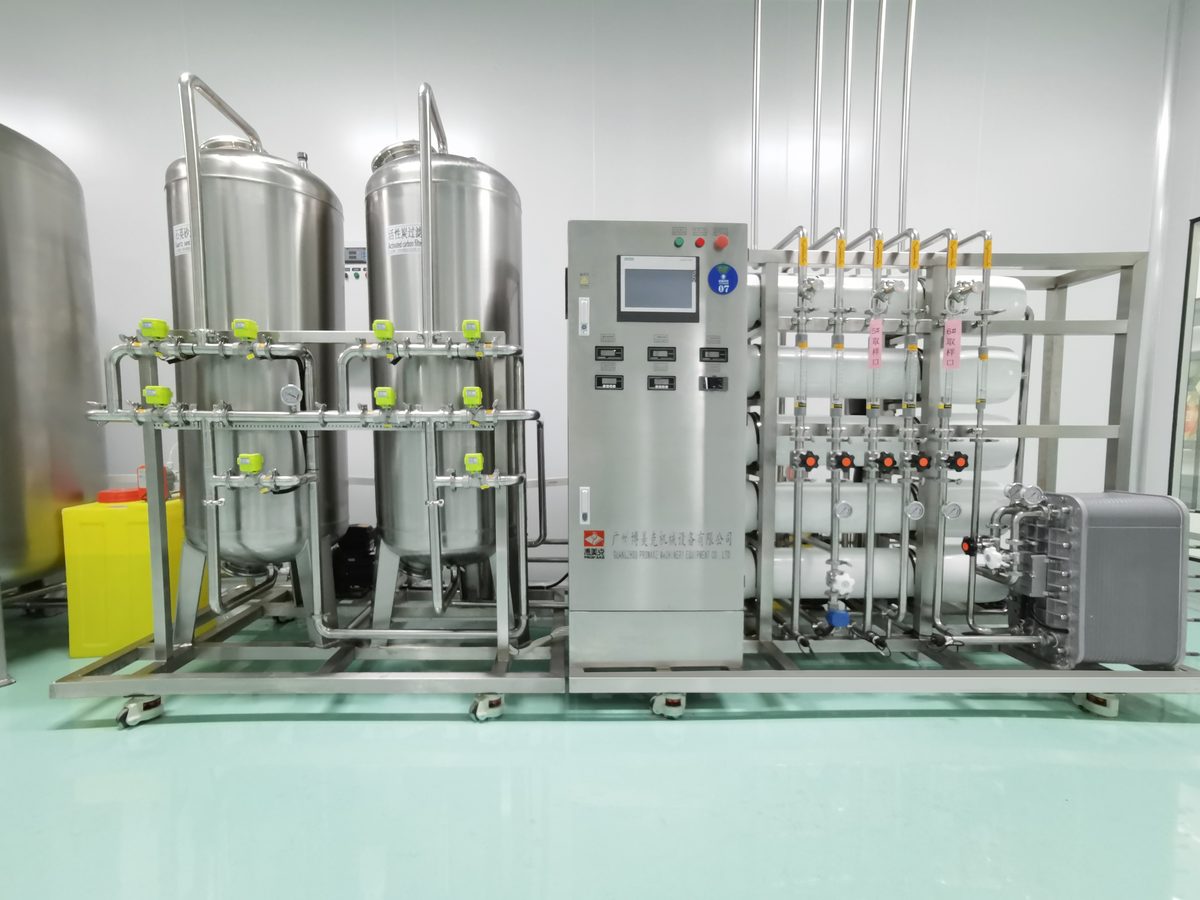
RO Water System
Step 4 · Disinfection-phase preparation
Mix and dissolve the disinfection ingredients such as ethanol and quaternary ammonium salts evenly with the neutralizer, humectant and solubilizer

Oil Phase Tank & Water Phase Tank |

|
Step 5 · Vacuum emulsification & mixingCore Equipment
Gel base swelling and mixing with the disinfection phase, neutralization & gelatinization, homogenization and vacuum defoaming — the key process that ensures the uniformity and stability of the disinfectant gel

Vacuum Emulsifier Mixing Tank |

|
Step 9 · Filling
Quantitatively fill into packaging containers via the filling machine
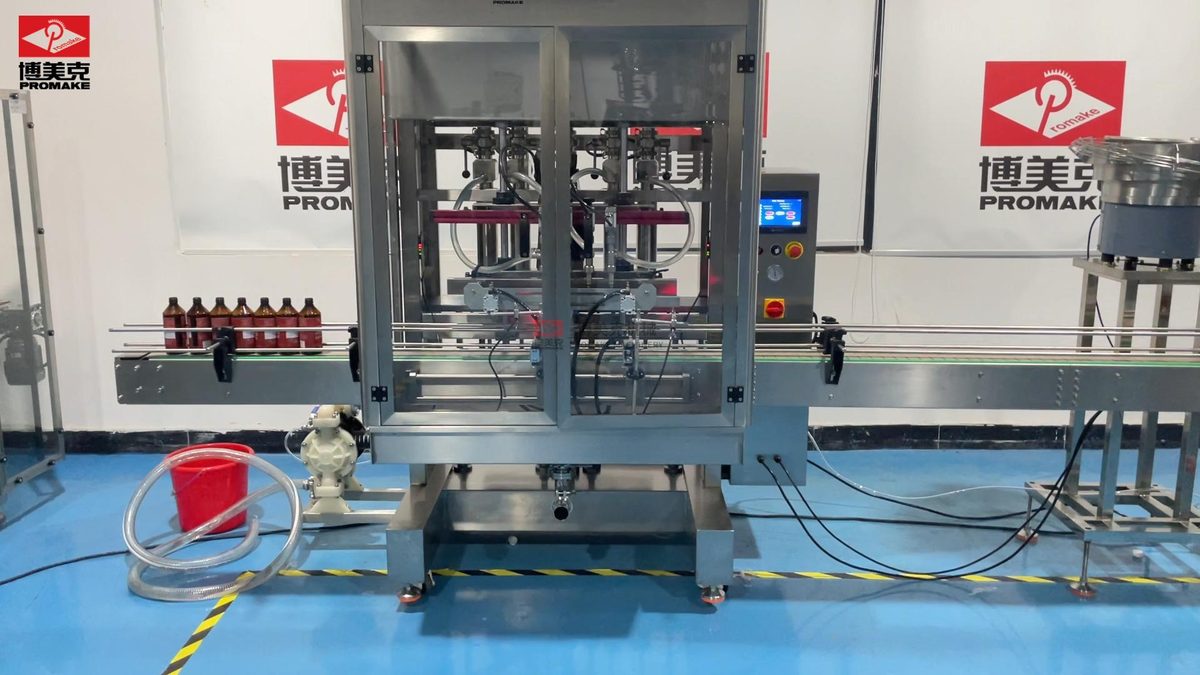
Four-Head Filling machine
Step 10 · Packaging
Labeling, sealing, coding, cartoning

Capping Machine |

Labeling Machine |

Inkjet Printer |
Supporting Equipment
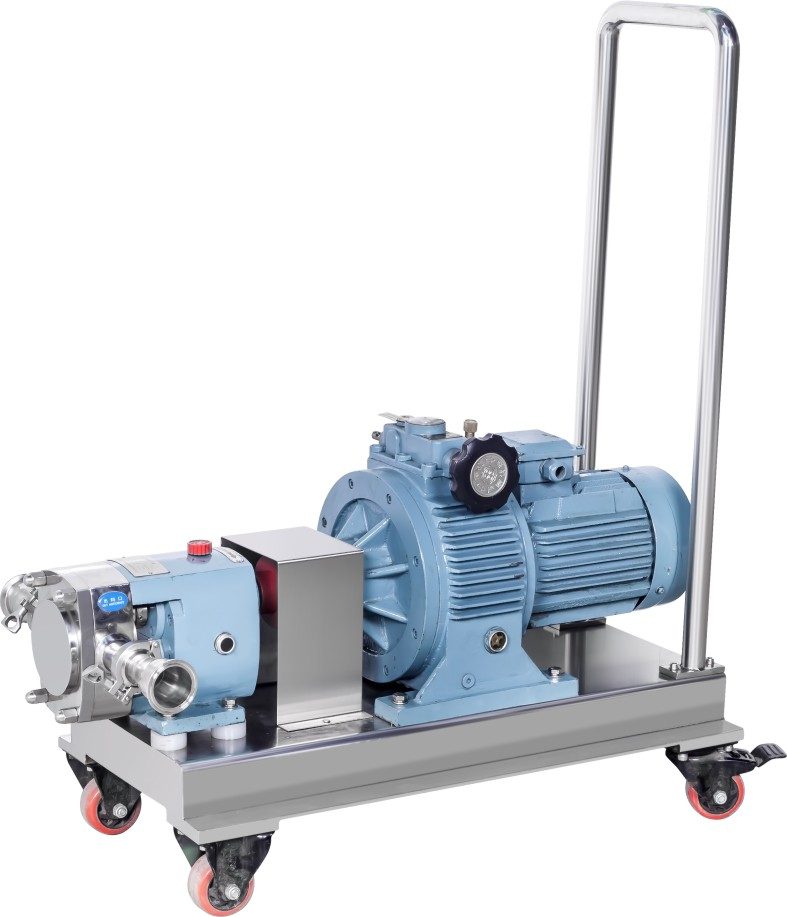
Rotary Lobe Pump
The figure below shows the production process flow of disinfectant gel products. The core equipment highlighted in orange, the “Vacuum Emulsifier / (Jacketed) Mixing Tank”, sits at the vacuum emulsification & mixing step after gel base swelling and disinfection-phase preparation, and is the key equipment of the whole line.
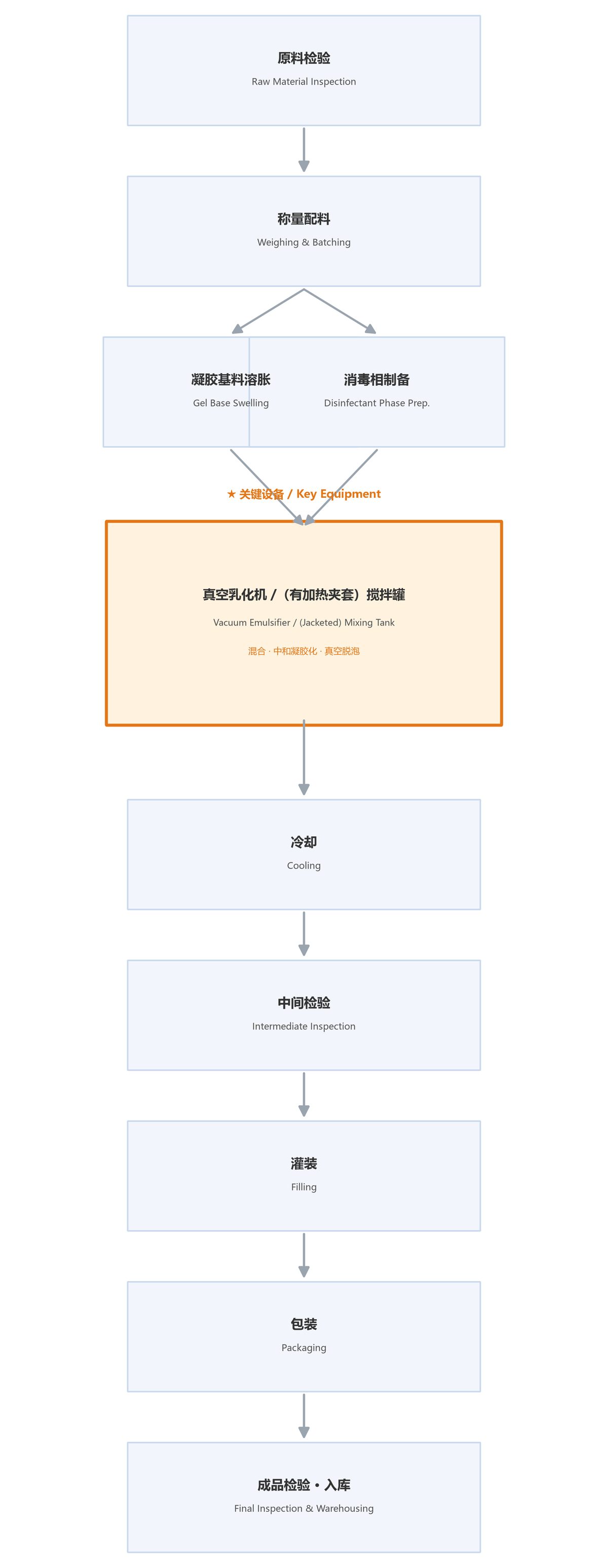
Figure: Process flow of disinfectant gel products (★ key equipment: Vacuum Emulsifier / (Jacketed) Mixing Tank; labeled in both Chinese and English)


