
Key Equipment: Mixing Tank
This document describes the process flow and equipment configuration of the perfume cosmetics production line, focusing on the line layout built around the core mixing equipment — the Mixing Tank with Freezing, filtering.
Perfume cosmetics (such as perfume, eau de toilette and cologne) are fragranced products made from fragrance oils, alcohol (ethanol) and deionized water through mixing and blending, aging, filtration and filling. The core process is to fully dissolve and mix the fragrance oils with solvents such as alcohol and water in the mixing tank, forming a uniform, clear alcoholic fragrance solution with a well-coordinated scent. Mixing, aging and filtration directly determine the uniformity of the fragrance, clarity and stability, and are the key links of the whole production line.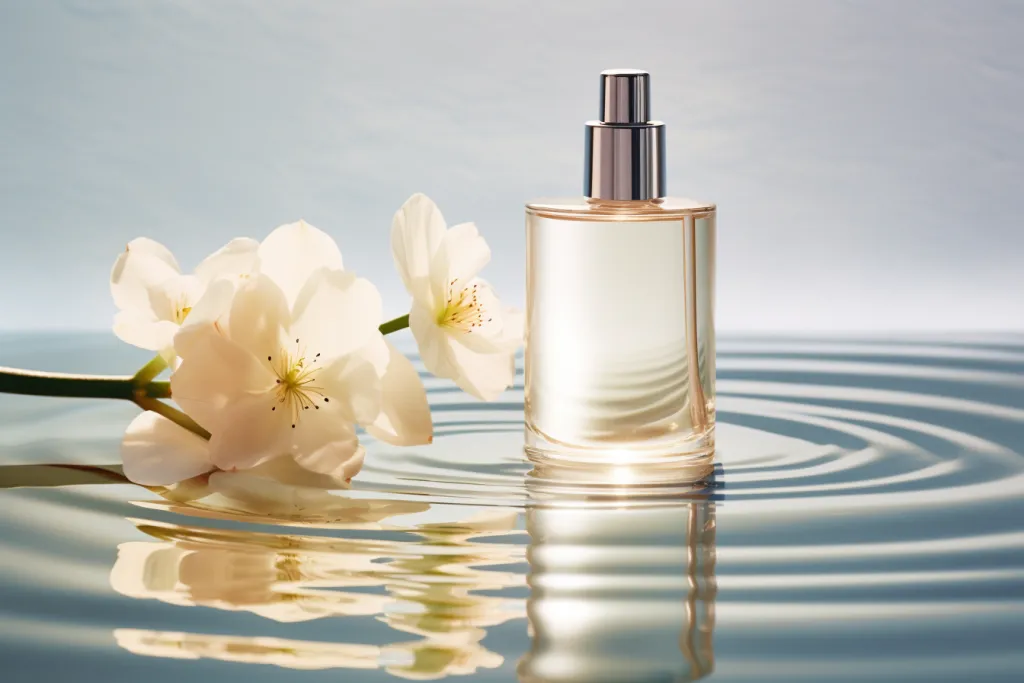
By material flow, the perfume cosmetics production line is divided into four functional zones — pretreatment, blending, post-treatment, and filling & packaging — organized around the core mixing equipment (Mixing Tank):
| Functional Zone | Main Processes | Main Equipment | Function |
|---|---|---|---|
| Pretreatment zone | Raw material inspection, weighing & batching | Electronic scales, batching containers, measuring cylinders | Inspect and weigh raw materials such as fragrance oils, alcohol and water |
| Blending zone (core) | Mixing & blending, stirring and dissolving | Mixing Tank | Fully mix and dissolve the fragrance oils with solvents such as alcohol and water in the mixing tank, and homogenize |
| Post-treatment zone | Aging, filtration, intermediate inspection | Aging tank/storage tank, filter, inspection equipment | Age statically so the scent becomes well coordinated; filter out impurity particles and complete intermediate inspection |
| Filling & packaging zone | Filling, packaging, finished product inspection | Filling machine, packaging machine, coding equipment | Metered filling, packaging and labeling; inspect finished products before warehousing |
Materials flow sequentially from the pretreatment zone into the blending zone, post-treatment zone and filling & packaging zone, forming a continuous, closed and traceable production flow.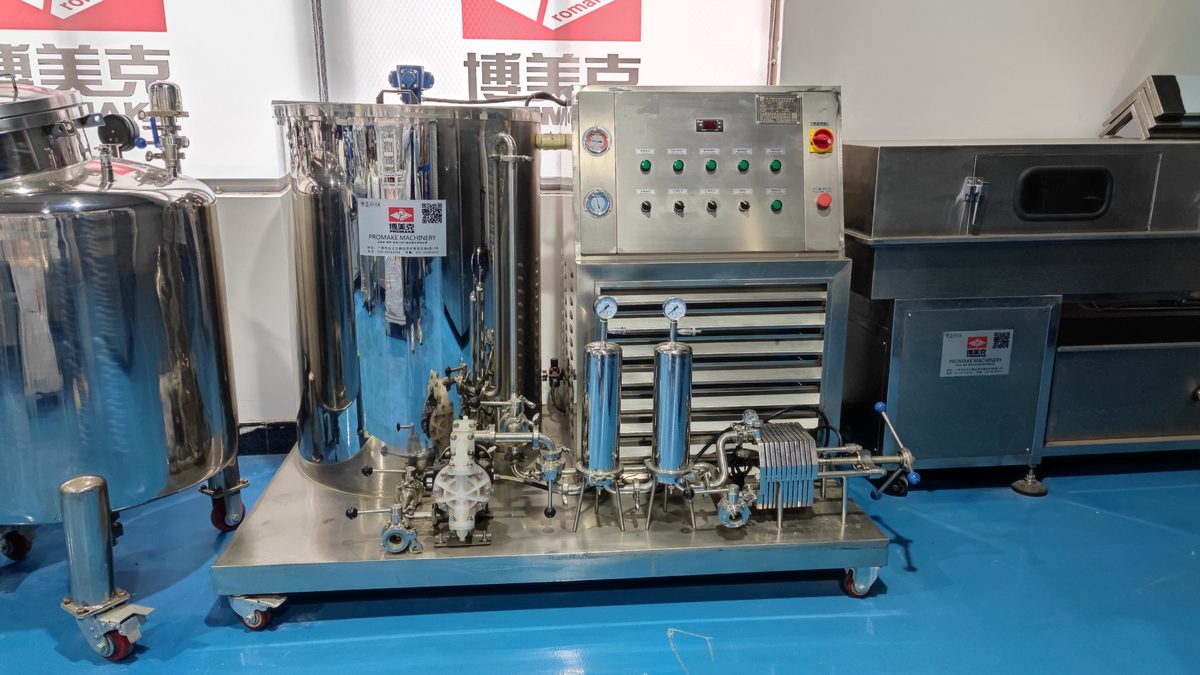


The typical process flow of perfume cosmetics is: raw material inspection → weighing & batching → mixing & blending (Mixing Tank) → aging → filtration → intermediate inspection → filling → packaging → finished product inspection & warehousing. Each step is described as follows:
| No. | Process Step | Step Description | Key Control |
|---|---|---|---|
| 1 | Raw material inspection | Inspect raw materials such as fragrance oils, alcohol and deionized water; store them for later use after they pass | — |
| 2 | Weighing & batching | Accurately weigh the fragrance oils, alcohol, deionized water and other raw materials according to the formula | Accurate proportioning |
| 3 | Mixing & blending | Charge the fragrance oils and solvents such as alcohol and water into the mixing tank; stir until fully dissolved and homogenized, forming a uniform alcoholic fragrance solution | Mixing uniformity |
| 4 | Aging / resting | Age the mixture statically so that the fragrance oils and alcohol blend fully and the scent becomes coordinated and stable | Aging ★ |
| 5 | Filtration | Filter the aged solution to remove impurities and insoluble particles, obtaining a clear, transparent product | Filtration ★ |
| 6 | Intermediate inspection | Test semi-finished products on scent, clarity and other physicochemical indicators; transfer to the next process after they pass | Pass/fail judgment |
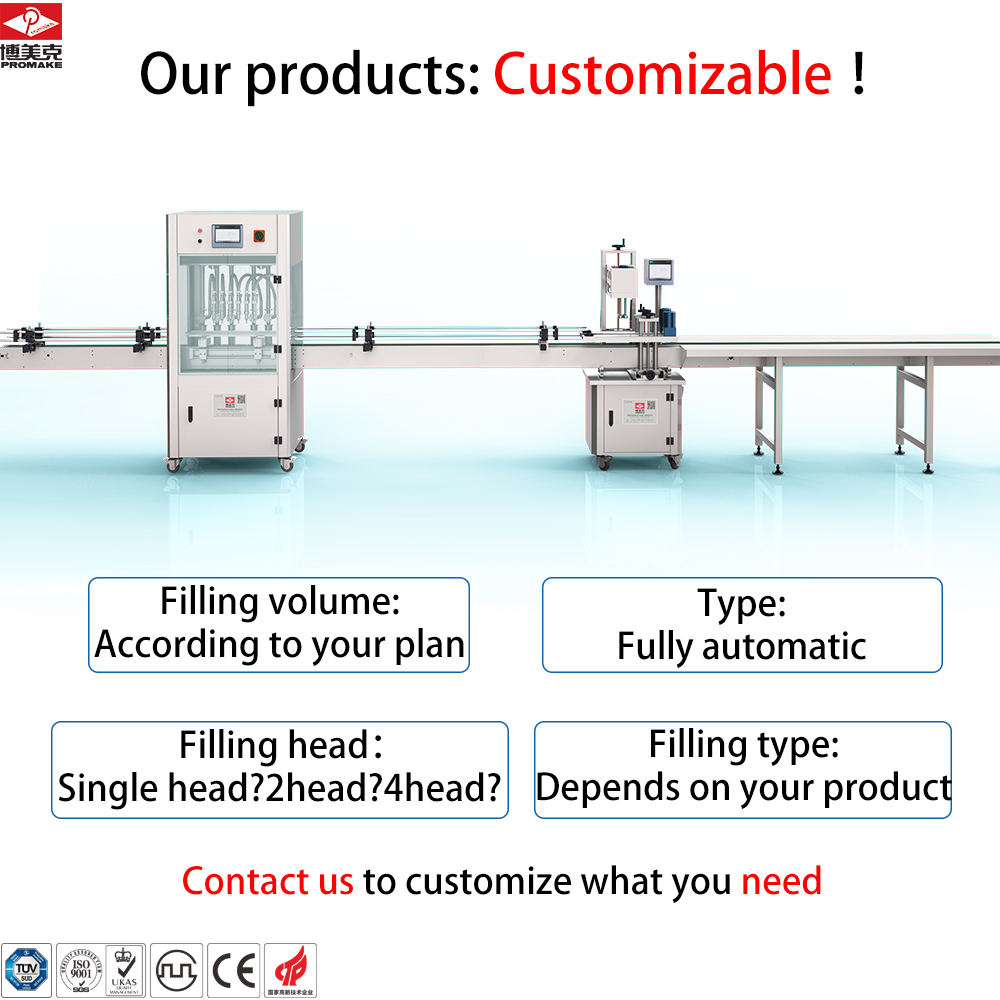
| 7 | Filling | Quantitatively fill into perfume bottles and other packaging containers via the filling machine | Filling metering |
| 8 | Packaging | Capping, labeling, coding, cartoning | Complete marking |
| 9 | Finished product inspection & warehousing | Inspect finished products against standards; warehouse them after they pass | Pass/fail judgment |
Note: The steps marked with ★ in the table (aging and filtration) are key process control points.
The mixing tank is the core equipment of the perfume cosmetics production line, used to fully mix and dissolve the fragrance oils with solvents such as alcohol and water. The mixing tank usually adopts a closed structure with a stirring device and a jacketed temperature-control device, ensuring uniform mixing and a clear, transparent product.
| Item | Description |
|---|---|
| Function | Mixing, dissolving and homogenizing the fragrance oils with solvents such as alcohol and water — the key process that determines scent coordination and clarity |
| Main structure | Closed tank body, optionally with a heating/cooling jacket for temperature control |
| Stirring system | Low-speed stirring with paddle impellers (frame/anchor/paddle types) ensures full dissolution and uniform mixing |
| Material requirements | Usually made of stainless steel with a smooth inner wall, easy to clean and contamination-proof |
| Sealing | Closed design prevents alcohol evaporation and loss of fragrance, reducing waste |
| Advantages | Uniform mixing, full dissolution, simple operation, good hygiene, easy cleaning |
In the production line, the Mixing Tank receives the fragrance oils and solvents from the weighing & batching step and completes full mixing and dissolution under stirring, producing a uniform alcoholic fragrance solution, which then passes through aging and filtration into the subsequent filling and packaging processes.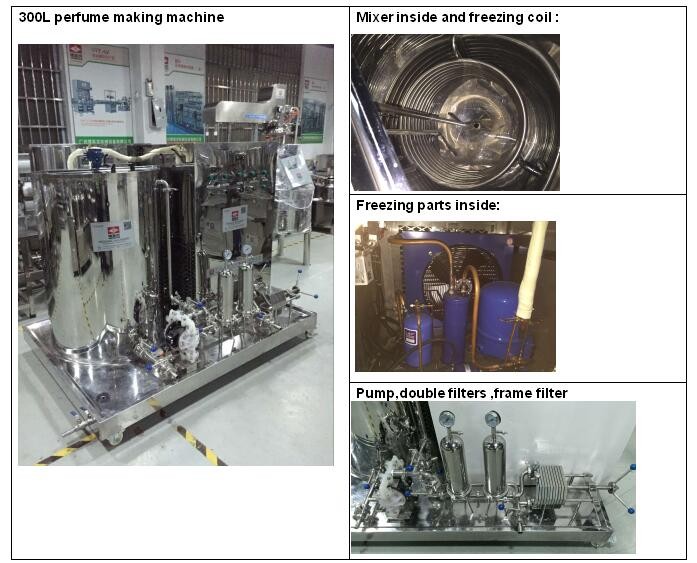
Step 3 · Mixing & blendingCore Equipment
Mixing, dissolving and homogenizing the fragrance oils with solvents such as alcohol and water — the key process that determines scent coordination and clarity
|
|
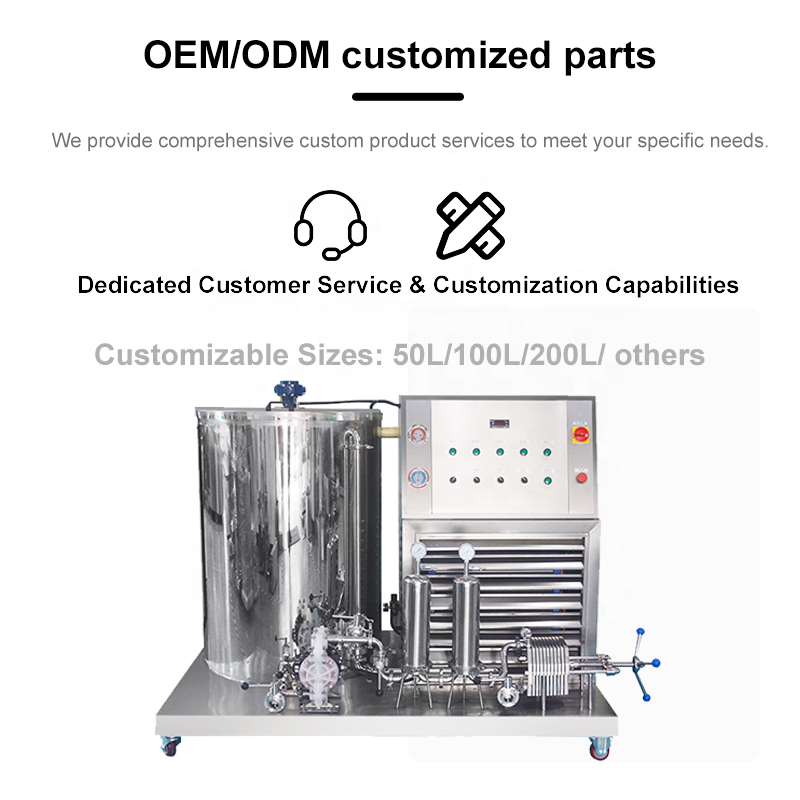
Perfume Mixing Chilling-Filtration Machine |
Step 4 · Aging / resting
Age the mixture statically so that the fragrance oils and alcohol blend fully and the scent becomes coordinated and stable
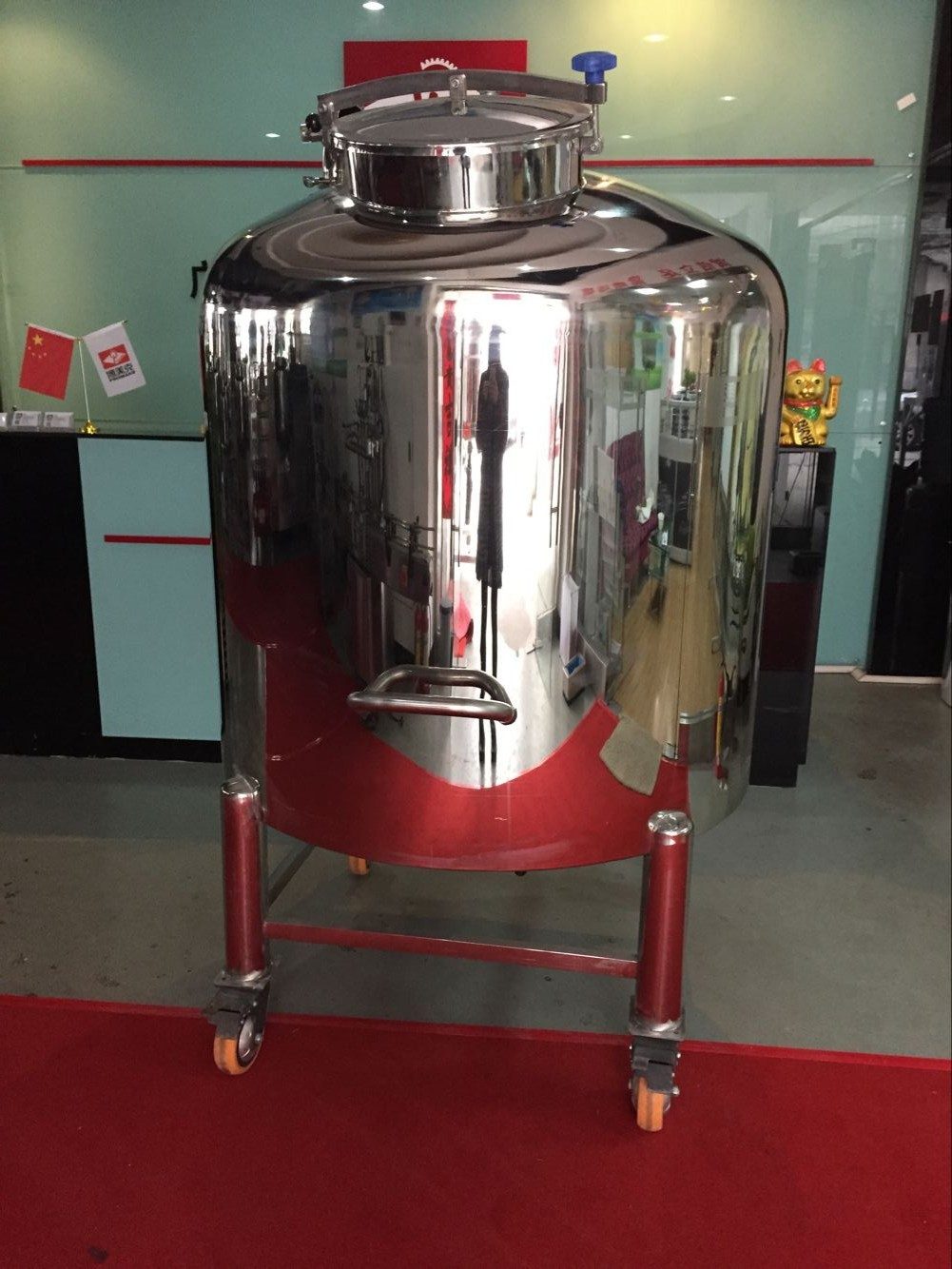
Storage or Aging Tank
Step 7 · Filling
Quantitatively fill into perfume bottles and other packaging containers via the filling machine
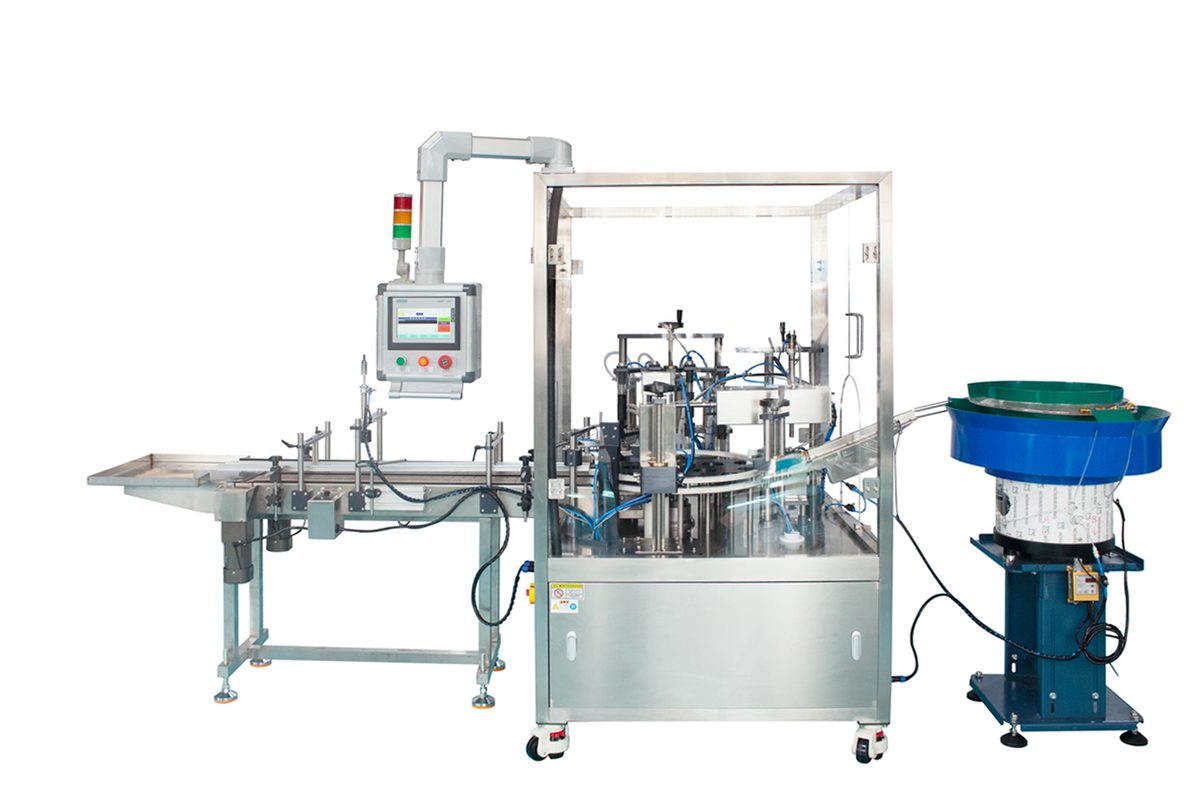
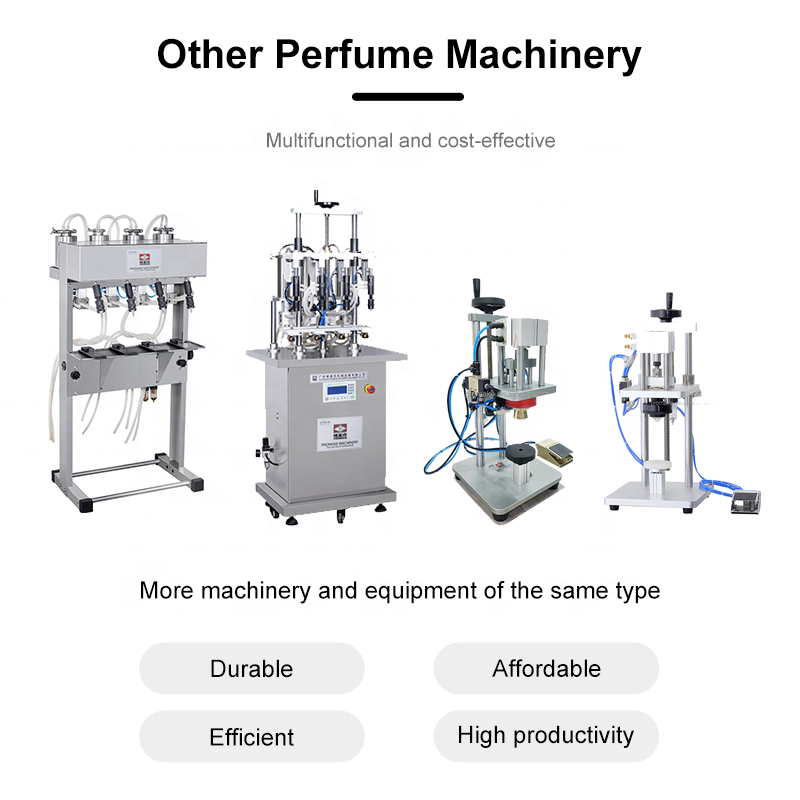
Automatic Perfume Filling, Capping & Crimping Machine
Step 8 · Packaging
Capping, labeling, coding, cartoning

3D Film Wrapping Machine |

Labeling Machine |

Inkjet Printer |

Cartoning Machine |
Supporting Equipment

RO Water System |

Pneumatic Diaphragm Pump |
The figure below shows the production process flow of perfume cosmetics. The core equipment highlighted in orange, the “Mixing Tank”, sits at the mixing & blending step after weighing & batching and is the key equipment of the whole line; the two key control points, “Aging” and “Filtration”, are also marked.
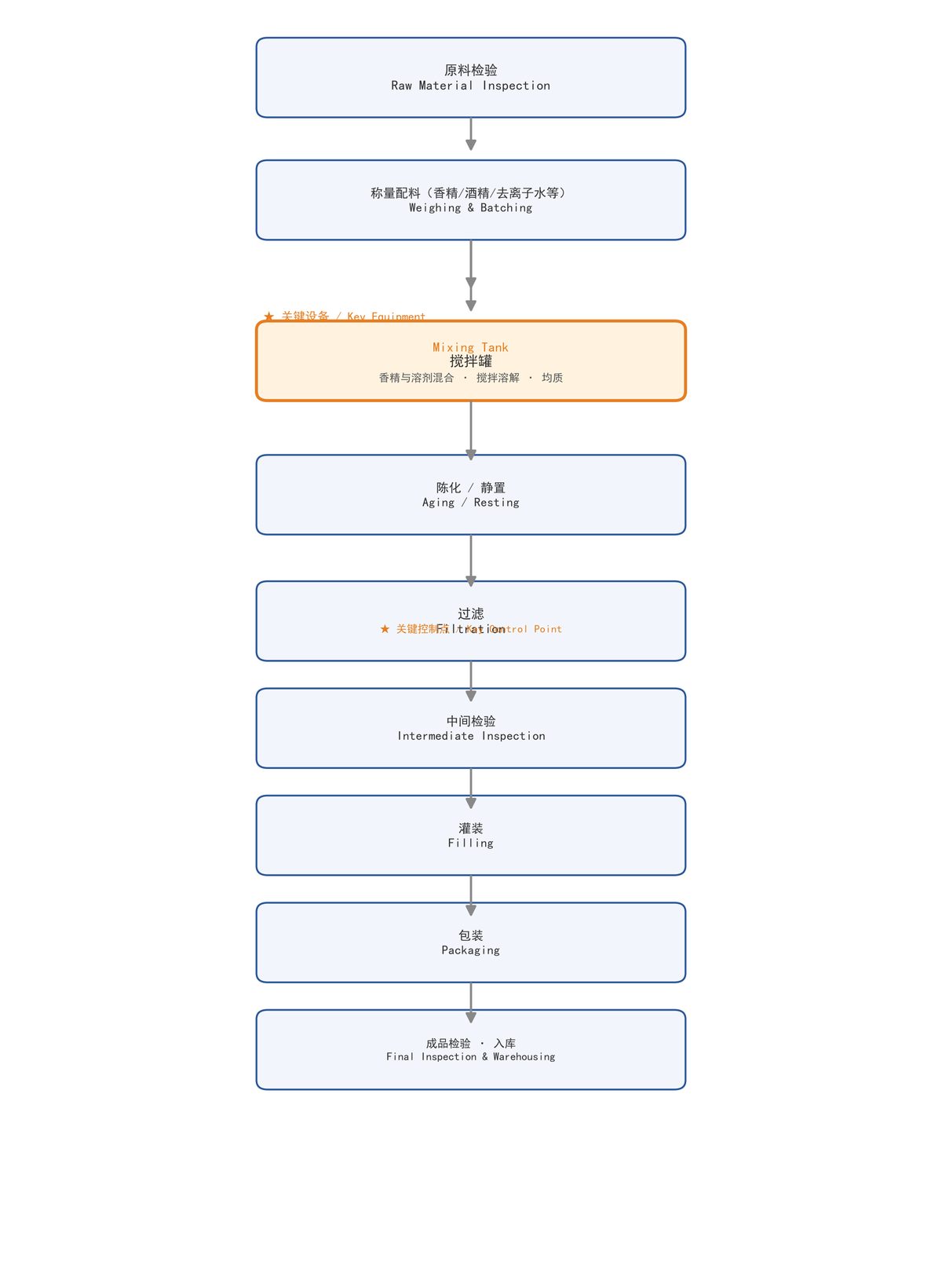
Figure: Process flow of perfume cosmetics (★ key equipment: Mixing Tank; labeled in both Chinese and English)


