
Introduction: OEM, ODM, and own-brand production change the vacuum emulsifier conversation because the brand name, formula, and quality rules do not always sit with the same party.
A buyer comparing vacuum emulsifier machine manufacturers, vacuum emulsifier system manufacturers, or vacuum emulsifying mixer machine suppliers is usually not just looking for a bigger tank. The real question is who owns the brand, who controls the formula, and who sets the process rules that the machine must follow. Once that is clear, the equipment conversation becomes much easier to read. That ownership map matters because the same industrial vacuum emulsifier can be configured for very different jobs. One line may simply execute a brand’s fixed recipe. Another may need to support a supplier-developed formula. A third may have to protect a company’s own brand and its internal quality standard across repeated batches. Those are different machine questions, even when the outside product category looks the same.
OEM, ODM, and own-brand are not just marketing labels. They describe where the brand name, the formulation, and the technical know-how sit. In OEM production, the brand owner normally brings the brand and the product spec, while the manufacturing partner makes the product to that spec. In ODM production, the manufacturing side usually offers a base design or formulation concept, and the brand side adapts it for market launch. In own-brand production, the company selling the product usually owns the mark and also controls the formula and the product rules more directly. That is why trademark language matters here: a trademark protects the brand sign, a patent protects an invention, and copyright protects original expression such as manuals or drawings. Those are different assets, and they may belong to different parties in the same production chain. That split changes the machine conversation immediately. An OEM line often starts with a fixed formula and a clear batch target. An ODM line may begin with a manufacturer’s base process and then adjust texture, mixing behavior, or heating. An own-brand line usually asks a deeper question: how will the plant reproduce the same result every time, with the same texture, vacuum effect, and discharge behavior? That is why ownership is not a side issue. It decides what kind of vessel, control, and documentation conversation comes first.
The production model does not choose the machine by itself. What really drives configuration is order size, product mix, and who is responsible for the quality standard after the first batch ships.
A brand may call the job OEM, ODM, or own-brand, but the batch size still has to match the vessel. A 200L line and a 5000L line answer very different business needs, even if both are making creams, lotions, gels, or ointments. Smaller commercial runs may care more about flexibility and changeover speed. Larger runs care more about batch stability, feeding rhythm, and how the main tank, oil phase pot, and water phase pot support the full production rhythm. This is why capacity should be read as a production question, not a label question. A company running several short-product cycles may not need the largest tank just because it owns the brand. A contract producer making one high-volume SKU may need a much larger vessel even if it is working on an ODM format. The useful question is simple: how much material must move through the line, how often, and with what level of consistency?
Once the brand or formulation owner starts caring about repeatability, the control system matters more. A PLC touch screen, a semi-auto pneumatic or electric control mode, or a more manual setup changes how tightly the operator can repeat the same run. The more the formula depends on exact heating, vacuum timing, mixing order, or discharge rhythm, the more the control conversation moves from “can it run? ” to “can it run the same way every time? ” That is where documentation becomes part of the ownership story. An own-brand company that owns the formula usually wants records that make later lots easier to reproduce. Batch notes, operating settings, and run results become useful because they help the plant keep the same texture and process behavior. FDA process validation guidance points in the same direction: consistent performance has to be established across the intended process, not treated as a one-time lucky run. In practical terms, that means the machine should be discussed as part of a repeatable production system, not as a standalone mixer with a flashy spec sheet.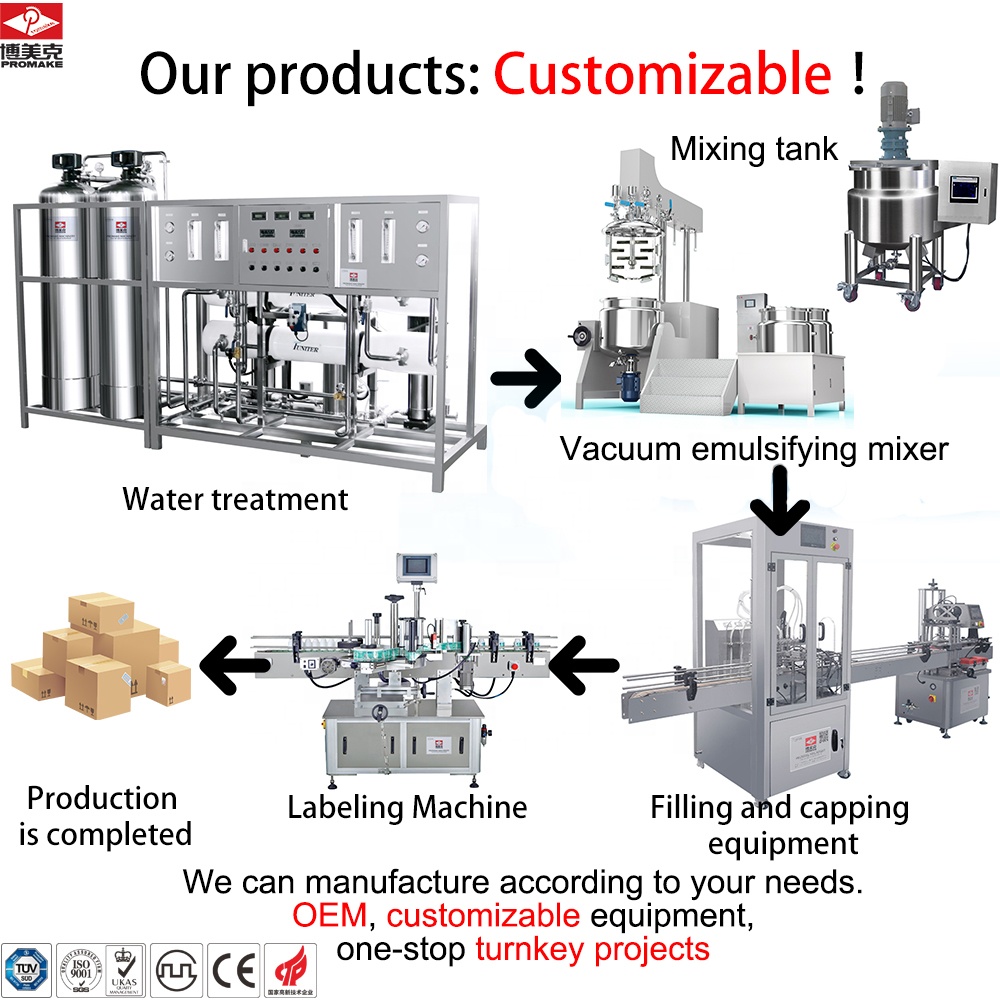

A customizable industrial vacuum emulsifier such as PROMAKE’s PMK-A hydraulic lifting vacuum emulsifier shows how these ownership questions turn into real machine options. The model range spans 200L to 5000L main tank capacities, which already tells a reader that the line can support very different batch sizes. The hydraulic lifting structure speaks to access and handling, while optional heating jackets, PLC touch-screen control, semi-auto pneumatic or electric control, and an explosion-proof control box and wiring option show how the same base platform can be adapted for different plant rules. That is the useful lens for OEM, ODM, and own-brand production. A brand that owns the formula may care most about heating, control mode, and discharge path because those settings shape the final texture. An ODM project may care about how easily the base design can be tuned for a market-specific product. An OEM line may care about whether the machine can exactly follow a fixed spec across repeated lots. Even the available power options matter when a formula moves across plants or regions. The configuration question is not “what is the fanciest machine? ” It is “which setup fits the formula, the batch plan, and the quality system that owns the result? ”
OEM, ODM, and own-brand production change the vacuum emulsifier conversation because ownership changes responsibility. When the brand, the formula, and the process rules sit in different hands, the machine has to answer different questions. OEM leans toward spec execution. ODM leans toward adaptation of a base design. Own-brand leans toward repeatable in-house control. That is why the first useful step is not comparing supplier size or chasing a machine price. It is mapping who owns the mark, who owns the formulation, and who sets the batch standard. From there, capacity, vessel layout, heating, control mode, and documentation all become easier to match. A line like the PMK-A series is best read through that lens: a configurable industrial platform that can be shaped around the production model, not the other way around.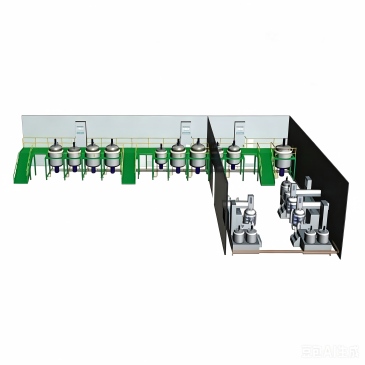
A:OEM usually means the brand owner brings the brand and a clear product spec, while the manufacturer builds to that spec. ODM usually means the manufacturer offers a base design or formulation idea first, and the brand adapts it for its own market. In vacuum emulsifier manufacturing, that difference changes who leads the discussion on tank layout, heating, control mode, and process detail.
A:When the brand also controls the formula, the line has to reproduce that formula the same way again and again. That makes capacity, mixing order, vacuum handling, heating, and discharge behavior more important, because the equipment has to protect batch consistency across repeated runs. Own-brand production usually asks for a tighter fit between the machine and the internal quality standard.
A:Capacity, heating jacket choice, control mode, power supply, base style, safety enclosure, and discharge setup are the main points. It also helps to clarify whether the order is a single machine or a full line, because that changes how the vacuum emulsifier fits the rest of the production flow. Those are the settings that shape the final production behavior, not just the appearance of the machine.
Trademark, patent, or copyright | USPTO
Process Validation: General Principles and Practices | FDA


