
PROMAKE Case Study | Vacuum emulsifying units + in-line packaging line · Cosmetics, health foods, disinfectants, hygiene products · [50] metric tons per month | One-Stop ODM Delivery · A Partnership That Grows
When one workshop has to pass inspection as a cosmetics plant, a health-food plant, a disinfectant plant and a hygiene-products plant, the equipment list is the easy part. Materials, cleanliness levels, separation of people and materials, and the ability to walk a visitor through the room without apologies — all of it has to hold at the same time.
Dalian Sanli holds production licenses for cosmetics and health foods, and manufactures and sells pre-packaged foods, disinfectants, hygiene products, single-use medical supplies and Class I medical devices. It is certified to ISO9001, ICTI, ETI and GMP. As its product range expanded, the company needed a workshop where emulsifying, compounding and packaging run as one continuous operation.
PROMAKE delivered that on a one-stop ODM basis — front-end emulsifying and back-end packaging planned as a single package.
Multi-license, multi-category operations mean the same room gets audited many times over. That requirement is only really satisfied by having one party answerable for the whole line. This is how the delivery was structured, and what it built for the people running the plant.
At a glance
A Multi-Qualification Challenge
In the same factory, there is both parallel and separate production lines for cosmetics, food, disinfectants and medical supplies. The shared equipment must be hygienic, easy to replace, have clear flow of people and materials, and be fully auditable throughout the process.
Packaging Downstream
The packaging hall is a tall, bright cleanroom with epoxy flooring and marked lanes. Long stainless conveyors and mobile filling units form a flexible line that can be reconfigured for different container sizes, while large observation windows let visitors watch without entering (Fig. 1–2).
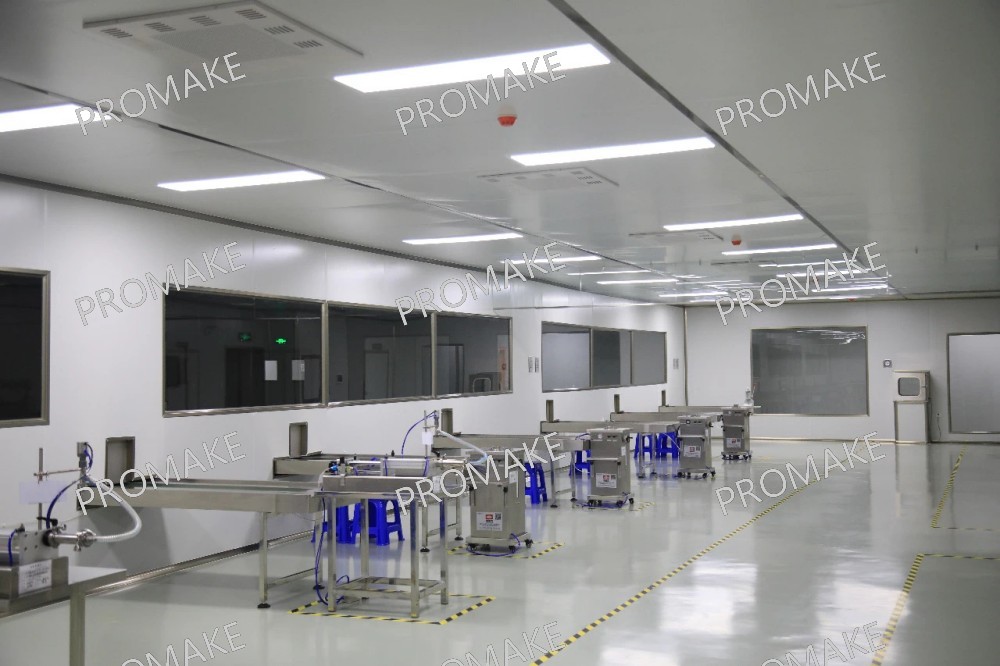
Fig.1 Packaging line: conveyors and compact filling units

Fig.2 Long packaging run with observation windows
Emulsification Upstream
Upstream, PROMAKE vacuum emulsifiers are installed in a row, with control cabinets and guarded pump sets. Sanitary stainless vessels and clamp piping support easy changeover between product categories. Operators work in full cleanroom garments and masks (Fig. 3).
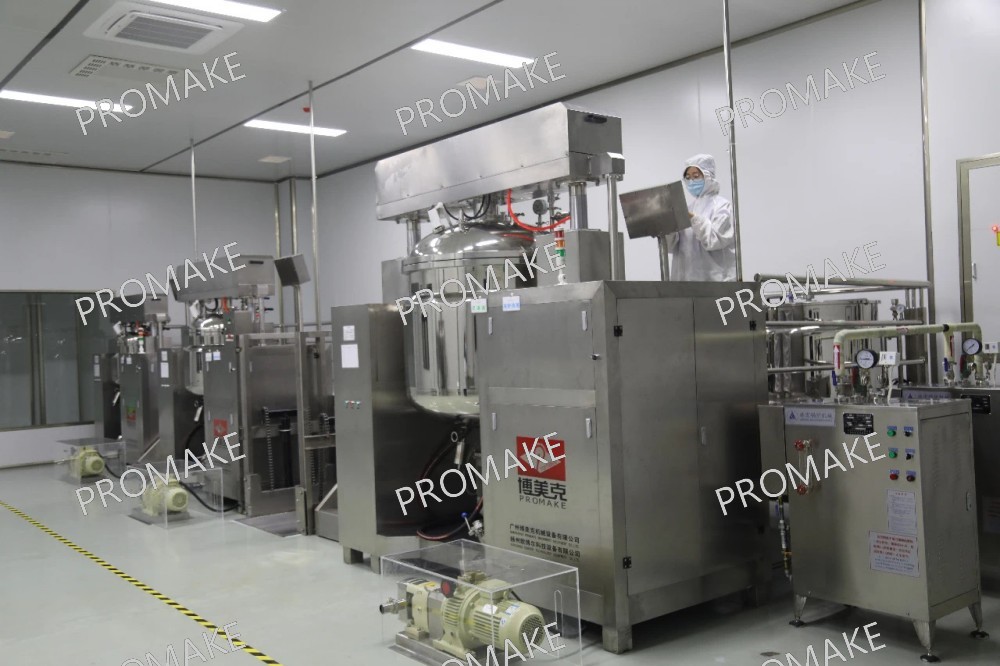
Fig.3 Vacuum emulsifiers with operators in cleanroom garments
The conventional route splits a new line across four suppliers: the equipment maker, the piping contractor, the cleanroom panel supplier and the packaging vendor. Each is competent; each also has a scope boundary — and where the emulsifying side and the packaging side meet, that boundary is usually a conveyor that nobody wants to own.
Under one-stop ODM delivery, PROMAKE acts as the builder of the whole line rather than a supplier of one part of it:
One thing tends to get overlooked: fast response on site comes from local people. PROMAKE works with its dealers and engineering agents in the region, who handle site coordination and routine inspections close to the plant. PROMAKE carries the technical responsibility for the line; the local partner carries the response time. Together, they make a complete delivery.
For Sanli, that translated into a start-up date that could be committed to, acceptance criteria in writing, and a single party to call when something needs resolving.
How a line is installed sets how it behaves for the rest of its working life. PROMAKE manages installation as a project in its own right, not as "deliver and position."
Before anything ships, engineers verify the hall item by item: floor load capacity and protection of the finished epoxy coating, water, drainage and power interface positions, and whether cleanroom pressure differentials and air distribution match the layout drawing. Anything that does not match is corrected before the equipment arrives.
Installation then follows a fixed sequence: positioning and leveling → operating platform and guardrails → process piping and valve connections → electrical and control wiring → dry-run testing of individual units → full-line trial with real material.
The trial run is not an empty spin. It uses actual product to verify the emulsifying temperature curve, the vacuum level reached and the takt time at the handover to packaging — and it confirms that the separation of people and material flows is actually working — before acceptance begins.
For Sanli, that removes the gray zone. There is no "we will see how it runs after it is installed."
Consistent output depends half on the equipment and half on the people running it. PROMAKE treats operator training as a required deliverable: hands-on, alongside the line, with a competency check before handover — not a manual left on the bench.
Training covers every step of a production batch:
None of this consumes extra production time. Sanli's operators started working alongside the engineers during the trial phase, so by handover the team could run the full sequence from charging to finished product unaided.
One workshop has to satisfy cosmetic GMP alongside the production-management requirements for hygiene products and medical supplies, while staying presentable to visitors. Quality control cannot be a final inspection step; it has to live inside the equipment:
For a plant team, "peace of mind" comes down to three questions: will someone answer when it breaks, can we actually buy spare parts, and can we add capacity without tearing the room apart. On the Sanli project, all three were settled up front:
Every product format Sanli makes maps to a specific stage on the line:
|
What Sanli sells |
Typical products |
The PROMAKE stage that handles it |
|
Cosmetic creams and lotions |
Face cream, cold cream |
Emulsifying and homogenizing in the vacuum unit, with top-mounted lifting agitator and homogenizing assembly |
|
Health-food pastes |
Paste and gel-type products |
Closed compounding in the mirror-finish vacuum vessel, with key parameters recorded and reproducible |
|
Disinfectants and hygiene products |
Gel-type disinfectant, wet-wipe liquid |
Closed mixing and transfer, minimizing product exposure |
|
Packaged goods |
Bottled, tube and boxed products |
In-line conveyor with multiple small filling and sealing units |
|
Compliance and visitor access |
— |
Double-glazed viewing windows and separated people/material routes, supporting factory audits and external reviews |
Every stage in that table was designed and built by PROMAKE as one system, planned together with Sanli's cleanroom and building conditions. That is what "one-stop" means in practice: the client never has to translate requirements between an equipment maker, a construction crew and a piping supplier.
One-stop delivery is only the starting point. What turns a project into a long-term relationship is that all three parties grow on the same job.
For Sanli: the plant moved from emulsifying and packaging handled in separate outsourced steps with heavy intermediate transfer and slow handoffs, to a continuous operation where front-end emulsifying and back-end packaging run as one line, at a capacity of [50] metric tons per month. When equipment capability rises, the product range has somewhere to go.
For the local dealer and engineering agent: the team moved from mostly single-machine sales and ad-hoc installation to taking part in full-line selection, cleanroom coordination and local after-sales. Walking one turnkey project from start to finish changes a team's technical depth, its service radius and its standing in a negotiation.
For PROMAKE: every delivery adds standardized modules, process parameter templates and training material to the library, which local partners then carry into the next project. Stronger partners mean faster response for the next client.
That is the shared growth the project was built around — from doing a bit of everything to doing one thing properly and precisely. Equipment depreciates. A partnership that grows together does not.
|
Who |
Where they started |
What this project changed |
What comes next |
|
Dalian Sanli (the client) |
Emulsifying and packaging handled as separate outsourced steps, with heavy intermediate transfer and slow handoffs |
Front-end emulsifying and back-end packaging running as one continuous line, with smooth transfer between stages, at [50] metric tons per month |
Keep extending front-end and back-end capacity toward [ ] metric tons per month and bring in more product categories |
|
Local dealer / engineering agent |
Mostly single-machine sales and ad-hoc installation |
Took part in full-line selection, cleanroom coordination and local after-sales |
Larger turnkey projects and spare-parts service |
|
PROMAKE |
Supplied individual machines and equipment packages |
Delivers whole-line design, process templates and training systems |
Replicate the standard modules into more regions and industries |
The bottom line
In closing
Installation with an owner, operators trained until they are confident, quality engineered into the structure, maintenance handled before it becomes urgent, and partners who grow with the project — that is the whole case for the way Dalian Sanli bought this line.
If you are planning an emulsifying, mixing or packaging line of your own, visit PROMAKE at https://promakemachinery.com, or contact our engineering team and your local dealer or engineering agent for a free process assessment and line-layout recommendation.
